
Why Human Survival Must Supersede Institutional Inertia and Financial Interests
The appeal issued by former Belarusian political prisoners on October 20, 2026, was meant to mark a critical turning point- a direct demand to prioritize human life over diplomatic routines.
As an institution holding an explicit representative mandate, the Belarusian Representative Assembly (BRA) delivered its formal Statement of Claim & Support, reinforcing the position that human lives are non-negotiable.
However, instead of triggering a coordinated transatlantic response, this initiative has encountered systemic resistance and institutional paralysis. As an official organization, BRA deems it necessary to address the structural reasons behind this sabotage.
Deflecting Responsibility: The "Address Minsk"
RhetoricIn response to the open letter, official political representatives released public statements arguing that "the true recipient of these demands is Minsk, as Alexander Lukashenko holds the prisoners". While the blame for political persecution indisputably rests with the regime in Minsk, redirecting the appeal away from Western capitals serves as a convenient posture of deflection.
Demarcating Western democracies as passive bystanders rather than active diplomatic leverage-holders undermines the fundamental premise of international advocacy. Demanding action from the EU, the UK, Switzerland, and the US is not a exoneration of the regime; it is an explicit demand for democratic governments to utilize every available diplomatic, economic, and transatlantic mechanism to save lives immediately.
Institutional Monopoly and Political Gatekeeping
The current political landscape in exile has generated a rigid gatekeeping structure. Initiatives originating outside the dominant political centers are systematically ignored or discouraged under the narrative that "the Office knows best". Independent statements-including BRA’s formal appeal-have been met with an informational blackout across affiliated media outlets, while international partners in Switzerland and Europe are pressured to adhere strictly to authorized channels. This attempt to maintain a political monopoly harms the very community it claims to represent.
Financial Interests and the Industry of the Status Quo
When an entire ecosystem relies on continuous grant allocations tied to tracking repressions and reporting statistics, a conflict of interest emerges. A radical shift toward real, decisive solutions threatens the financial foundation of an industry built around managing the crisis rather than resolving it. Resolving the political prisoner tragedy risks dismantling the very institutional framework that feeds this administrative machinery.
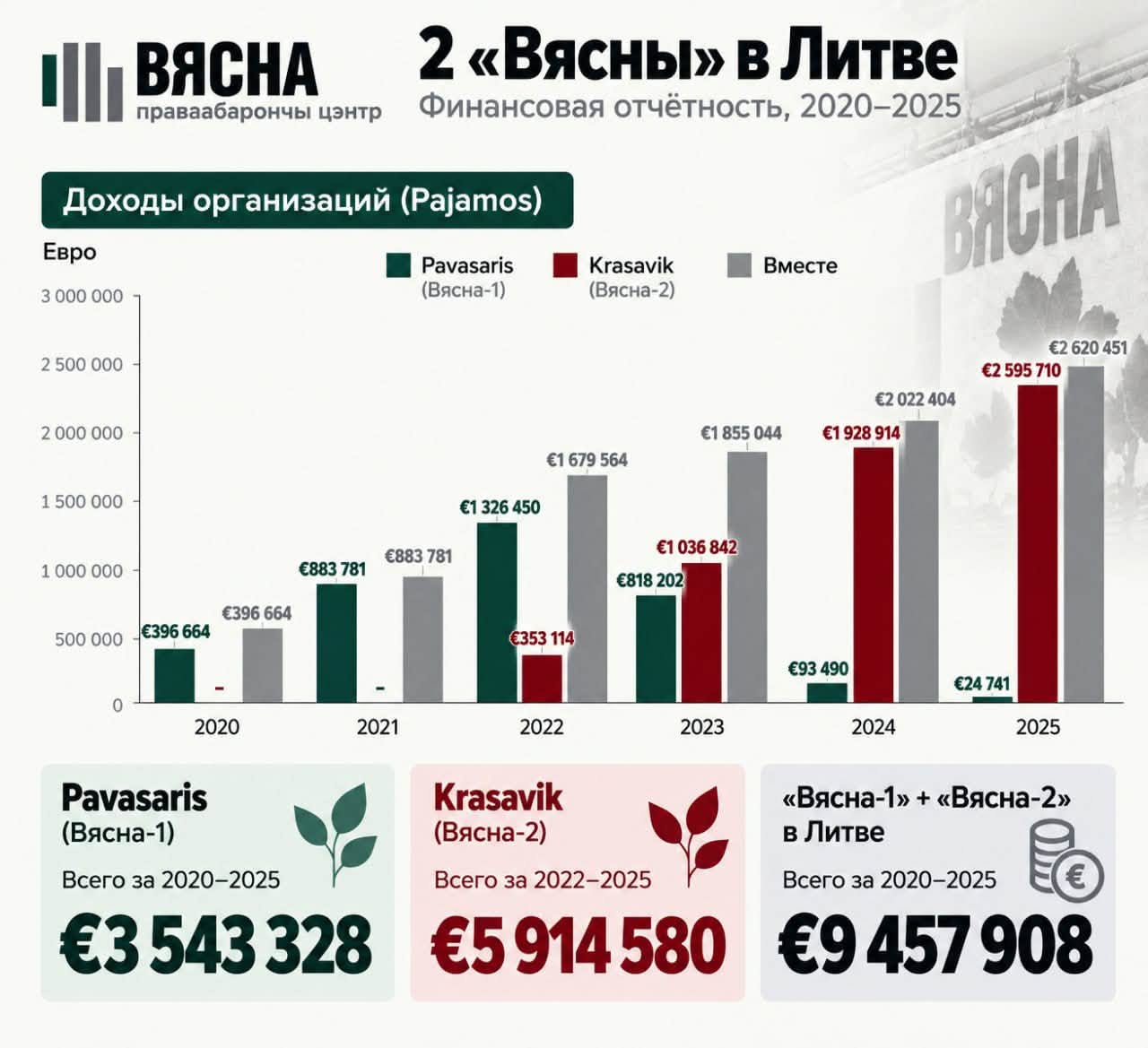
Behind the political reluctance to embrace alternative strategies lies a deeper structural problem: the institutionalization of victimhood and crisis management. Over recent years, foreign human rights and civil society structures have transformed into multi-million euro grant-funded operations-budgeted at millions of euros annually (as evidenced by public financial records of primary funding recipients in the region).
OUR POSITION & COMMITMENT
Human Lives Over Bureaucratic Budgets:
No institutional budget or political status justifies the continued suffering of hundreds of individuals behind prison walls.
True Transatlantic Engagement:
BRA will continue building direct, unmediated alliances across the United States, Switzerland, the EU, and the UK, circumventing political gatekeepers to ensure real results.
Uncompromising Accountability:
We demand that both international decision-makers and democratic leaders be held accountable to the immediate priority of securing human freedom. Political ambitions, institutional gatekeeping, and grant-dependent routines must yield to human survival.
On behalf of the Belarusian Representative Assembly (BRA),
Tamara Queen
President & CEO